Stephen Weiland Stephen Weiland

Ignorance, the 4th Estate, Education, Greed

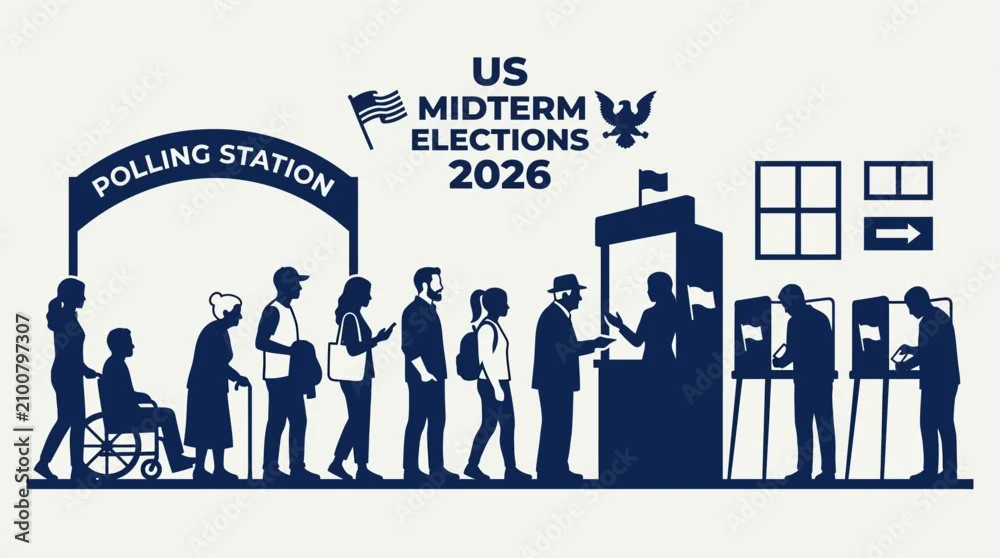
On November 4th, 2025, the New York City voters, citizens or not, elected Vohran Mamdani as the mayor of their city. This was their choice in an open and free election. I asked myself, a third-generation citizen, “How could this happen?”

On November 4th, 2025, the New York City voters, citizens or not, elected Vohran Mamdani as the mayor of their city. This was their choice in an open and free election. I asked myself, a third-generation citizen, “How could this happen?”. The man is a polished, thirty-three-year-old man with great hair. He is the son of rich parents which has afforded him the luxury of never holding a real job or starting his own company. He is a smooth talker and likeable. He is unfamiliar with the trials and tribulations of the vast majority of working people. So what! Many a citizen with nothing more than these slim cosmetics has been voted into a government office. Why am I concerned?

I am more than concerned. I am worried. Beneath that smooth and likeable façade, I know who he is. I know what he believes. He is a current day Karl Marx. Marxism is a social, political, and economic theory that critiques capitalism by explaining society through class struggle between the capital class (bourgeoisie) and the working class (proletariat). Marxism predicts that the exploitation of the working class will lead to a revolution where the working-class overthrows capitalism to create a classless, communist society where the means of production and distribution are controlled by the state. This guarantees a classless, equitable society where everyone is equal and shrink wrapped in Utopian happiness.

Mamdani claims to be a Democratic Socialist. This is a contradiction in terms. “Democratic” implies rule by the people. “Socialist” implies rule by the state. He denies that he is an antisemite. He clearly favors Hamas as opposed to Israel. His parents are Socialist/Marxist ideologues. He plans to tax the rich in order to provide free benefits to the underclass. He does not understand the roots and success of these United States. This is not hearsay. Public remarks, interviews and podcasts undeniably support these truths. All this begs the question, “Why did hundreds of thousands of New Yorkers vote for him?”. The answer is deceptively simple: It is a deadly combination of ignorance, the 4th estate, education and greed.

Ignorance

Ignorance isn’t bad or a character defect. All it means is that you don’t know something. If you’ve never been exposed to the Pythagorean Theorem you are ignorant about the Pythagorean Theorem. The same applies to your political knowledge and opinions. If you’ve never heard or examined the political views of the “other side”, then you are ignorant of what they offer. If you’ve never examined your own political side, then your beliefs are based on what somebody else tells you to believe and you are ignorant about your own beliefs. If you are ignorant about both sides, then your voting decisions will be based on your parents’ political party, what you heard on the most recent cable news, or what’s in it for me. Many NYC voters are simply ignorant. They didn’t know or care who is this Mamdani.

4th Estate

The term Fourth Estate or Fourth Power refers to the press and news media in the explicit capacity of advocacy, implicit ability to frame political issues, and in factual reporting. Though it is not formally recognized as a part of a political system, it wields significant indirect social influence. The derivation of the term “Fourth Estate” arises from the traditional European concept of the three estates of the realm: the clergy, the nobility and the commoners. The equivalent term “fourth power” is somewhat uncommon in English, but it is used in many European languages referring to the separation of powers in government into a legislature, an executive and a judiciary – and a fourth, the press.

In modern use the term Fourth Estate is applied to the press with the earliest use in this sense described by Thomas Carlyle in his book On Heroes and Hero Worship: Burke said that there were Three Estates in Parliament; but, in the Reporters’ Gallery yonder, there sat a Fourth Estate more important far than they all.”

In a democracy, or in any society where differing opinions can be publicly expressed, the Fourth Estate plays a vital and often determining role. In the modern day the news media – print, electronic and periodical – serves to report on political and socially related matters and thereby to inform the voting public. In the great majority of cases the news media, this Fourth Estate, is the only source of information that informs the voting public and therefore has a major influence on the public’s opinion and vote.

In a perfect journalistic world, the news media reporting would be clearly delineated between factual reporting and opinion. The world, including journalism, is not perfect. Many times what should be and appears to be factual reporting is flavored with bias and opinion – sometimes blatantly. On both sides of the political spectrum, Democrat and Republican, the reporter’s, or network’s bias creeps in. In visual news reporting we too often see the reporter’s “role of the eye”, a smirk, a condescending presentation, a gushing laudatory or a comment such as “If you can believe this!”. A particular and often overlooked source of bias is reflected in the reporter’s non-reporting of information favorable to the other side. This is an error of omission – it is a lie.

In current day reporting, bias is apparent. Around 95% of the mainstream media elite are Democrats. This is verifiable by voter registrations and by recorded political contributions. The bias is also verifiable by organizations which report on the percentage of reporting either favorable or unfavorable to the President and his administration. Across news organizations such as CNN, MSNBC, ABC, CBS, NPR, the NYT and WAPO the overwhelming reportage, in the high 90 percentile, is unfavorable to Trump. This in spite of the many successes of the Trump administration which go unreported.

But why would the media try to trash Trumpian ideas and control elections? The first answer is as mentioned above. They are overwhelmingly Democrats and carry the water for the Democratic party. The second reason is not as obvious. They’ve been educated in the secular and progressive schools on the East and West coasts. They live, believe and opine in a closed bubble where outside opinions and beliefs are dismissed as archaic and irrelevant. The time-honored beliefs about American superiority, Christian/Judeo values and honor have no purchase. We are fatally flawed, racist, and plagued by an inbred and illicit white superiority. The current USA structure and history is flawed and must be replaced by a progressive structure that guarantees equity for all. The third reason is closer to home. There is a swamp in Washington and in the elite media. Trolling around in this swamp may be a bit dirty but its monetary rewards exceed the occasional smell. Trump policies just don’t understand. A Republican is an outsider. Republicans will try to change the way things have always been. That just won’t float in the swamp. The media has no particular love for Mamdani, but he runs as a Democrat in the most influential city in the country. He was opposed by an Independent and a Republican. Enough said. The ignorant vote is formed by the media.

Education

If you are ignorant, if you aren’t swayed by the media, then what informs your opinions? It is education in all its forms. We all know that in the last 10,20,30 40 years the amount of public money spent on public grammar and high school education has increased dramatically. In lock step the tuition in state and private colleges and universities has kept pace and even outdistanced the 12k schools. What has been the payback? On an objective cost/benefit analysis, what are the results? They are dismal.

This country, the most advanced, the richest, the “most enlightened” of Western democracies, is falling behind not only other Western countries but even some third world countries. Our children are losing pace with a good portion of the rest of the world. How can this be? Our per student expenditure grows each year. Our teacher salaries now exceed, on average, private sector comparable salaries. We have a glut of school “Administrators” whose job it is, I assume, to promote quality education and control costs.  It is abundantly clear, beyond argument, without challenge, that money beyond subsistence levels and even in abundance does little if anything to improve education results.

Not only has education lost ground as regards basic learning, it has also been polluted by DEI at the high school and graduate levels. No longer is the wonderful and classic Judeo/Christian history of this country a center of focus. No longer are the truths of the Declaration of Independence and the value of our Constitution stressed. No longer are the miserable failures of Socialism and Communism highlighted. Our younger voters have no living memory of, and have not been taught the wonderful history of our country. Little wonder that they are prey to the sophomoric and Utopian promises of a Marxist Mamdani.

Greed

This word, greed, has an unmistakable meaning. It implies that you “Should not covet thy neighbor’s goods.” You shouldn’t seek money, goods and services that don’t belong to you. But what about those who think that they have a right to another’s goods, that equity is the prime government value, that the rich class is undeserving of their gains? These people have no problem accepting Mamdani’s promises of free this, that, and other things. Merit be damned. I deserve this free stuff.

Look no further for the answer to Mamdani’s election. It is a deadly combination of ignorance, the 4th estate, education and greed.

‍ ‍

Read More
Stephen Weiland Stephen Weiland

Is AI Biased?

Can AI be trusted? Can the result of an AI inquiry be biased and not neutral? Can an AI  inquiry requesting an answer involving differing opinions be neutral?

Consider the question “In the modern-day USA which is the better social standard – equity or equality?”. The current day popular wisdom would come up with different answers depending on who you asked. But what would AI, in the form of ChatGPT, come up with? And could you trust the answer?

AI is based on an all-inclusive database which contains a digitized record of any and all books, articles, opinions, lectures, pronouncements, and ideas since the beginning of recorded history.  There is no value judgment, nor should there be, on the inclusion of any of the above in the database. If it is extant and can be digitized, it will be included in an ever expanding and huge AI database. Note that this includes pictures and graphic presentations. The AI engine, a series of algorithms similar to our brain’s neural network, examines the database in an attempt to answer an inquiry. These algorithms do not and should not make any value judgements. The answer is based entirely on the past. It is based entirely on past and digitized human thought. It includes Newton’s, Maxwell’s and Einstein’s theories. It includes our Constitution and works on all the “isms” – Socialism, Communism, Fascism, and more. It includes the philosophical ideas of the distant past and present. It includes thoughts about love, hate, lust, and charity. Think of this data base as an immense and technically unlimited human brain that has read and stored every idea since sentient thought began.

The contents of this database can be split into two types. One type of information reflects physical, objective reality – the immutable laws of nature, molecular biology, the structure of a cell, the fact that 2 + 2 = 4. The other type of information picks up where objective reality leaves off. Here reside thoughts about emotion, fear, love, hate, good, evil, racism, consciousness, truth, falsity, government, power, greed, lust, and God. There is no firm ground here.  This information is the stuff of life.

Now let’s talk of bias in the database. If I ask a question involving objective, physical reality there should be no bias in the answer. Here AI should include only data that is true and verifiably accurate. If I ask “Does water expand as it freezes?”, there is only one answer, “Yes, it does expand.” If I ask what is the best defense against a newly discovered pathogen, I expect a non-biased answer I can trust because our AI data base should contain factual information on DNA and molecular biology.

But once I stray from inquiries involving objective reality, I no longer stand on firm ground. If I ask, “In the modern-day USA, which is the better social standard – equity or equality?”, I can expect an answer based on opinion. But whose opinion?  And since AI should not make value judgements, what do I make of the answer? Here bias enters the game. Since AI depends entirely on its data base of past thoughts and events, I can expect the AI answer to reflect the preponderance of content that favors, supports, or mentions either “equity” or “equality”.  This bias is similar to a human being (HI = Human Intelligence) answering the same question. This human will respond based on the preponderance of information he has observed in the media – TV, newspapers, journals, entertainment, …… If most of what he has observed favors or mentions “equity”, then his answer will favor “equity”. Conversely, if most of what he has observed favors or mentions “equality”, then his answer will favor “equality”. Note that if we are following AI rules, then our human observer cannot make a value judgment. He is limited primarily or even strictly to the amount of information he observes. If he has observed 100 favorable mentions of “equity” and only 60 of “equality”, then his answer wiIl be “Equity is the better social standard. “ It boils down to a numbers game. In this very real analogy, the AI data base is biased towards “equity”.

‍ ‍Now let’s assume that our human has asked AI to answer the question and AI says “Equity is the better social standard.” Now our human writes a paper which reflects this answer. The AI data base captures this paper and adds it to the number of instances mentioning or favoring “equity”. Now AI becomes a self-fulfilling prophecy. The more it sees of “equity”, the more it projects its numerical dominance. AI has become even more biased.

‍ ‍

Read More
Stephen Weiland Stephen Weiland

An Election Allegory - A Spiritual Event 2008

We stand in awe of this procession and try to link it with some precedent, some historical event, some memory of things past. Nothing fits, certainly not in US history

The great expression of hope, change and giddy love has passed. The media has now constructed a sedan chair for Obama and is carrying the Anointed One to the new Mecca, Washington D.C. On the four chair handles we have CBS, NBC, ABC and MSNBC. Marching in lockstep on each side of the Anointed One, waving palm fronds and with adoration pouring from their pores, are NPR, the New York Times, the LA Times and a swooning collection of left leaning newspapers. Following behind in raggedy procession are the poor, the underprivileged, the homeless, the lazy, the politically naïve, witless collegiate sophomores and those who still think that the Anointed One ran against George Bush.


On each side of this procession are stands supplying bottles of a new drink created by Moveon.org called “Feel Good Juice” (In tiny print on the label we spot “May cause serious hangover after election.”) and financed by George Soros. In the distance we see Nancy Pelosi and Harry Reid, clothed in gleaming white Roman togas, with outstretched arms welcoming the Anointed One to the new Oligarchy which will bring smothering happiness to all citizens, whether they like it or not. On all sides we hear a mystical, quasi-religious chant by enormous crowds of glazed eyed worshippers pointing toward the heavens. We look up and, behold, the clouds part. There, gazing down in a beatific vision, are the spiritual pillars of this amazing spectacle – The Reverend Wright, Bill Ayres, Louis Farrakhan, Rashid Khalidi and Tony Rezko  (Rezko appears to be clothed in prison garb). Following behind in a gray, lifeless line and linked together by economic chains, are a once proud group of Producers – corporations, entrepreneurs, small businesses and investors. Some falter under the heavy economic chains. Falling behind, they are jabbed with electric Tax Prods wielded by Barney Frank and Chris Dodd.   


We stand in awe of this procession and try to link it with some precedent, some historical event, some memory of things past. Nothing fits, certainly not in US history. But wait! What if the path these people are traveling is a yellow brick road? What if the termination is an audience with and the embrace of the Wizard of Oz? No, that’s too farfetched.  

Read More
Stephen Weiland Stephen Weiland

Passage

Years ago my dear brother-in-law Bill began that long and slow passage to the hereafter. First assisted living with my sister, Judy. Then transfer to the memory care unit with its doors locked to keep the residents from wandering off to a hazy place known only to a fading memory. Then what some call “graduation” – the last stop on life’s passage. I watched this wonderful man and friend decline as we shared long-ago memories of good times. The inevitability of this senseless but sure passage urged me to write the following.

I’m lost in space between God and this place.

I look in the mirror and I don’t see a face.

Somewhere, somehow in this meaningless race

I can’t recognize the state of grace.


My sister’s love, a man named Bill

declines each day but he isn’t ill.

His mind, his life, who he was before

slowly exits through some back door.


A man of good life with no score to settle.

A man who was made of very strong mettle.

A man whom I’ve loved for fifty years and more

is now fading away to some distant shore.


He smiles at me not knowing why.

Perhaps just because he was that kind of guy.

I share a word, a thought, of things from the past

but that faint glow in his eyes just doesn’t last.


He’s leaving me now without a goodbye,

with naught a hand waving or a heartfelt sigh.

The light of his life, the juice in his brain

is slowly, slowly, going down the drain.


Why he should leave in this drawn out way

with body still working but mind far away,

leaving my sister and me in dismay.

God tell me, is this your way?


Who knows what the fickle fates decree?

Is it peace, love or feckless glee?

Is it sadness, longing or discontent?

Will my life end with searches ill spent?


Now my sister’s love loses his presence.

Her glimpse of love loses all essence.

Is there in life true meaning to find

or do we just plod on - blind, blind, blind.

Read More
Stephen Weiland Stephen Weiland

Why tell a story? 

We are, at our core, remembering and story making creatures, and stories are one of the chief ways we find meaning in the flow of events. 

Before the written word, stories were all we had. They brought forward the past. They knitted together the family, the tribe in ever widening concentric social circles. There was always a wise man, a shaman, who knew and related these cherished stories. Without these stories - histories -  there was no shared sense of community, connection and purpose.


Why is history such a bore? Columbus in 1492? The Hundred Years war? The birth of our country in 1776? Dates, events, movements, wars collated and defined simply as dates and major trends. How boring. Why not promote narrative history filled with the dreams, the character, and the passion of those who create historical events? History should be taught as an ongoing story – a story filled with the emotions and character of the people creating the events which are recorded as history.


Why do children love to be told stories? Why do parents love to tell stories to their kids? It is a simple but vital way to communicate an understanding of the child’s surroundings and their place in it. A child’s early years without stories is a bleak landscape leading nowhere.


We are, at our core, remembering and story making creatures, and stories are one of the chief ways we find meaning in the flow of events.  The magnificent story of the creation and building of our country is the perfect example of the power of a shared story. It is a beautiful story which, in its repeated telling, ties us all together in shared beliefs.


The Bible is not just a collection of inspiring tales, wise advice, warnings and predictions. It is a story. The Old Testament is the ongoing story of a people chosen to produce the Savior. It chronicles and predicts in story form the coming of the Savior. The New Testament continues the story as it describes the life and progress of Jesus as predicted by the Old Testament. It is truly the greatest story ever told


A story should never die. The only way to keep it alive is to record it and retell it. Record your stories and make sure they are retold.

Read More
Stephen Weiland Stephen Weiland

Hi, Bush – Spring, 1959

It is a beautiful spring day at Notre Dame University. The main quadrangle is alive with young green leaves and grass. The huge and beautiful magnolia tree in front of the Golden Dome is in full pink, white, and muted red bloom. The sun, the cloudless sky, and the gentle morning breeze hint at a beautiful day. God is in his heaven and certainly at Catholic ND.

It is a beautiful spring day at Notre Dame University. The main quadrangle is alive with young green leaves and grass. The huge and beautiful magnolia tree in front of the Golden Dome is in full pink, white, and muted red bloom. The sun, the cloudless sky, and the gentle morning breeze hint at a beautiful day. God is in his heaven and certainly at Catholic ND.

I am headed East towards the liberal arts school. The stroll is lovely but I must get there in time for my morning Philosophy 101 class. Philosophy? Come on. This is the all-male ND of 1959. We are macho, football driven and certainly not other worldly. I take my seat in a class of about thirty. The windows to my left are open. They frame a row of blossoming bushes – and in comes the soft breeze.

The Professor - a portly, slow walking, slow talking older scholarly type with coke bottle thick black rimmed glasses – is late. Any time the teacher is late and the class is composed of male teens, the “let’s be quiet and learn something” atmosphere evaporates into load talk and jokes. It’s spring, it’s beautiful, the teacher is late and who wants to talk philosophy anyway.

In shambles our Philosophy 101 professor. He moves slowly toward the desk in the front, seats himself as if in a slow-motion movie, and gazes out the window to his right. When he entered the room, the class went respectfully silent. Then as his silent gaze stretches into minutes the class becomes antsy. Whispers and muffled laughs break the silence. What’s with this guy? This is the classic absent-minded professor type who just sits and gazes out the window. Has he lost it? Does he know where he is?

Silence. After what seems like five minutes, motionless and without breaking his gaze through the window, he says “Hi, Bush.” After a momentary silence given to trying to put this comment into context, the class breaks into laughter. Suspicions confirmed. This guy is nuts. When the laughter dies down, he turns his gaze on us and asks, “Can anyone tell me what I was just doing?” Luckily this challenge goes unanswered. Any answers could have been devastating.

Now he tells us what is going on. He is trying to understand and absorb the essence of “bushness”. He wants to come as close as he can to what makes that bush a bush. He is communicating, or attempting to communicate, with a part of our natural world. I’m sure that most of us are thinking “Good luck. Let me know how that works out.” In spite of this bizarre opening, which did get our attention, this worthy professor goes on to expand on his theme. He does make some headway and he did inspire me to look a bit more closely at all elements of the world around us.

I did like this kind and thoughtful man. One day after class I was walking with him and asking questions. The pace was slow. He was walking on my left as we headed west on the quadrangle. There were some trees closely bordering the walk on his left. He had some books under his left arm. He was deep in thought thinking about a question I had asked. His mind was not on walking and his eyes were not on the walk ahead. He had wandered a bit left and was headed for a glancing blow on a tree. I was tempted to say “Watch out” but thought this would be embarrassing and imply that he couldn’t manage walking a straight line. I should have. Ever so slowly he closed on the tree and then bumped into it. Totally unfazed, he backed off, moved right a bit, and we continued the walk.  I’m sure that this embarrassing incident registered not at all on his deep in thought mind. His autonomic nervous system handled the incident, and it was disposed of and immediately forgotten. I respected this professor who, I suspect, spent more time living in his mind than in the physical world.

Read More